
Ransomware Isn’t an Encryption Problem Anymore. It’s an Extortion Problem. Is Your St. Louis Business Ready?

Ransomware isn’t a distant headline anymore. It’s hit school systems, city networks, and businesses right here in the St. Louis metro in just the past few months. At CHR Managed Services, we work with St. Louis-area businesses every day to close the exact gaps attackers are exploiting locally, which means this isn’t theoretical for us it’s what we see and fix firsthand. And here’s what most St. Louis businesses still get wrong: backups alone won’t save you from what ransomware has become.
St. Louis is in an active window right now
University City’s network went down for weeks this summer. A May 2026 ransomware attack on the Canvas platform disrupted schools across the area. St. Louis County had to fend off an attempted breach of its own. And locally, attackers are shifting tactics and skipping encryption altogether in favor of straight data-theft extortion, and using AI-generated “CEO” voicemails to trick finance staff into wiring money.
These aren’t isolated incidents. They’re a pattern, and it’s playing out in real time across the metro I cover.
18+ DaysAverage time to recover from a ransomware attack, lost operating time that costs roughly 50x the ransom demand itself
$250K+Average ransomware incident cost for SMBs; over a third of attacked small businesses lose more than $500,000
259%Year-over-year jump in ransomware losses nationally, per the FBI’s 2025 IC3 report, with 63 new ransomware variants in 2025 alone
Backups won’t save you, here’s why
The single most important thing St. Louis business owners need to understand about ransomware today: it’s mostly a data-theft-and-extortion play now, not just an encryption problem. Attackers steal your data first, then threaten to leak it regardless of whether you pay or restore from backup. That means the real defense is preventing the initial breach )phishing-resistant email security, MFA, employee training) and having an incident response plan ready, not just hoping recovery tools bail you out after the fact.
What ignoring this actually costs you
• Downtime, not just ransom: average recovery now takes over 18 days, and that lost operating time costs roughly 50x more than the ransom demand itself.
• Direct financial hit: SMB incident costs typically run $150K–$250K+, and more than a third of attacked small businesses lose over $500,000 which is enough to wipe out a year’s profit or force layoffs and price hikes.
• Legal and regulatory exposure: Missouri law requires notifying the Attorney General if a breach affects 500 or more residents, adding legal and reputational fallout on top of the financial damage.
It’s already happening in our own backyard
These aren’t headlines from other states. They’re happening right here in St. Louis, and they’ve unfolded in just the past few months:
• University City: its network went down for weeks in June and July 2026, disrupting city operations.
• The Canvas platform: hit by a May 2026 ransomware attack that disrupted schools across the St. Louis area.
• St. Louis County: had to fend off an attempted breach of its own systems.
These incidents come up in almost every conversation I have with St. Louis-area prospects right now. The question isn’t whether it can happen here becauase it already has, more than once, in a single season.
What we’re actually hearing from St. Louis businesses
The objections I hear most often are consistent across every industry I work in:
We’re too small to be a target.” Nearly 60% of unprotected SMB owners believe this, but it’s backwards: attackers prefer small businesses precisely because they’re easier to breach, and most ransomware victims have under 1,000 employees. “Our backups will save us.” Common in a market like St. Louis with lots of legacy manufacturers and family-run firms, but most attacks now steal data before encrypting anything, so backups don’t stop the extortion threat. “We have cyber insurance, so we’re covered.” Many policies now carry ransomware exclusions or require proof of specific controls like MFA and EDR to pay out at all
Why timing matters for St. Louis businesses right now
Right now, St. Louis is in an active window. University City is still working through this summer’s outage, the Canvas hack hit area schools just months ago, and St. Louis County had to fend off an attempted breach of its own. At the same time, state lawmakers pushed cybersecurity grant legislation (SB 674 / HB 668) specifically because a recent Missouri Chamber of Commerce survey found nearly 90% of businesses are worried about cybersecurity with half of that program’s funding reserved for small businesses with 1–50 employees. Help and attention are ramping up in parallel with the threat. And with schools heading back into session in August (a period that already triggered one major local incident this year) vendors, contractors, and businesses connected to those systems have extra reason to tighten up now rather than after the next incident
What sets CHR apart on ransomware specifically
Beyond the always-on monitoring I covered in my last post, what sets CHR apart on ransomware specifically is speed and follow-through. We target a response within 15 minutes for critical incidents during business hours and 30 minutes after hours, so an active attack is acted on quickly and not discovered the next morning. Recovery isn’t a hope-it-works afterthought either: backups are tested and built to restore fast, with the recovery timeline agreed with you during the incident. And because everything from endpoint protection to phishing training to dark web monitoring runs through one team, there’s no finger-pointing between vendors when something goes wrong. Just one partner who already knows your business and acts immediately.
St. Louis businesses: find out if your backups would actually stop an extortion attempt.
If you’ve never tested your incident response plan, aren’t sure whether your backups protect against data theft (not just data loss), or just want a second opinion on where your gaps are, let’s talk. We’ll take a look at what you have in place and show you exactly where the risk is. No pressure, no obligation.


Your local contact
Request a free external vulnerability scan for your St. Louis business
Jonathan MitchellRegional Account Director, IT
A lifelong St. Louisan, Jonathan has called Brentwood, Creve Coeur and the Central West End home, and spent the last five years in sales here. He now leads cybersecurity services for CHR Managed Services across St. Louis and the Midwest, and knows the region block by block, industry by industry.
More from St. Louis
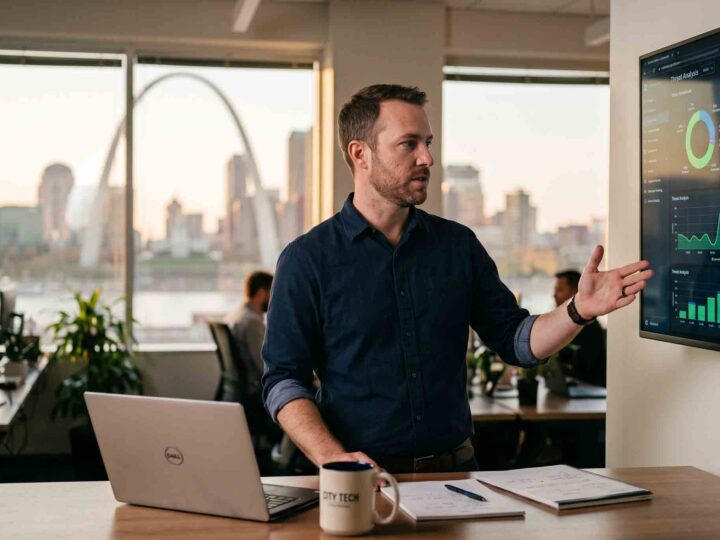
St. Louis Businesses Are Being Targeted. Does Yours Have What It Takes to Fight Back?
Ransomware, HIPAA, and CMMC risks are hitting St. Louis businesses now. Get a free external vulnerability scan from CHR Managed Services' local IT experts.
Related reading from our blog

A Cyber Scary Halloween
Halloween can be frightening for some – spooky decorations, scary costumes, not knowing what's lurking around the corner. What's interesting in our business is that Halloween and cybersecurity have…

Diving Deep into Phishing Scams
Phishing scams continue to be a prevalent and effective form to initiate a cyberattack, making it vital to recognize the threat it poses to your company. Without a…

4 Cybersecurity Considerations for When it Happens, Not If
Cybersecurity attacks are a little like shark attacks, most people know they’re possible, but they tend to happen to "other" people, so nobody prepares for them. But cybersecurity is a…